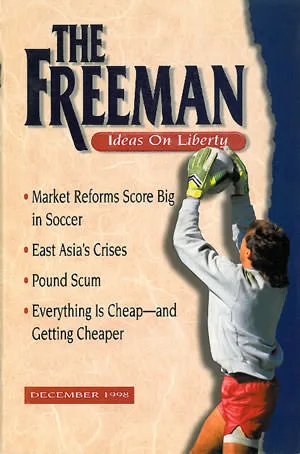
This issue explores the political and institutional roots of the East Asian financial crises, arguing that corruption, central planning, and misguided intervention—not markets—produced instability. Contributors discuss moral purpose in work, trade-deficit misconceptions, private vs. public animal-care incentives, and how market reforms have transformed global soccer. Additional articles analyze military-civilian relations, the fragility of prosperity, the costs of regulation, and the enduring moral and economic principles that support a free society.