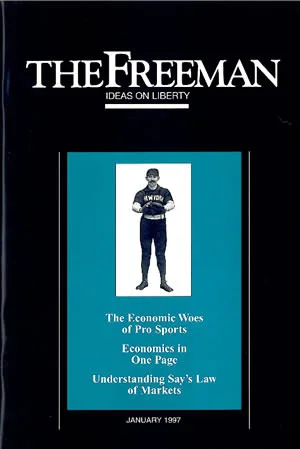
This issue examines how cultural attitudes toward wealth shape economic outcomes, arguing that societies which resent achievement undermine both liberty and prosperity. Contributors explore the persistence of age-old economic fallacies, the coordination role of prices, and the importance of voluntary moral action over political coercion. Additional essays address health-care reform myths, the dangers of anti-competitive regulation, and the deep historical roots of economic literacy.