The Freeman magazine was the flagship publication of the Foundation for Economic Education and one of the oldest, most respected journals of liberty in America. It was founded in 1950 through the efforts of John Chamberlain, Henry Hazlitt, Isaac Don Levine, and Suzanne La Follette. FEE acquired it in 1956, and within two years it had reached 42,000 subscribers.

Through its articles, commentaries, and book reviews, several generations of Americans have learned about the consequences and contradictions that flow from the illiberal policies of collectivism, interventionism, and the welfare state. For 66 years, The Freeman uncompromisingly defended the ideals of a free society.

FEE announced in September 2016 that the Fall 2016 issue would be the final edition of The Freeman magazine. Selected back issues are available at the FEE Store, and all issues are available here as downloads.

In June 2025, The Freeman was relaunched, but this time for the modern era on Substack. Subscribe for articles on markets, liberty, and culture from the perspective of anti-anti-anti-Communists.

Copyright Notice

Unless otherwise noted, and with the exception of John Stossel’s “Give Me a Break!” columns, all works published on FEE.org and FEE.org/freeman are published under a Creative Commons Attribution International License 4.0.

Feel free to share and copy as long as you credit FEE as the source.

Print Issues Archive

Filter by Year

20121112 coverjul94small - Home

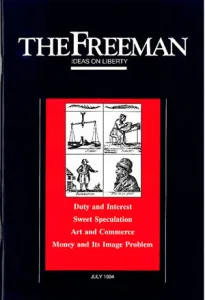
The Freeman: July 1994 Volume 44, 1994

This issue explores ethics in business, the tension between communitarian and individualist ideals, and how personal duty aligns with economic interest. Articles examine workplace transformation, the ethics of affirmative action, the spiritual meaning of money, and the moral role of entrepreneurship. Additional work analyzes banking reform, regulation’s hidden costs, global commerce, pedagogy of peace, and the tribal assumptions of welfare capitalism.
20121112 coveraug94small - Home

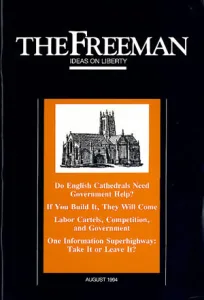
The Freeman: August 1994 Volume 44, 1994

This issue critiques managed health systems, Canada’s medical model, and how U.S. welfare programs fuel runaway demand. Authors discuss environmental regulation, homeschooling, natural-disaster legislation, labor cartels, and the dangers of centralized information networks. Additional essays defend free trade, celebrate Houston’s rejection of zoning, and explore everything from used-CD economics to Africa’s development challenges.

20121112 coversep94small - Home

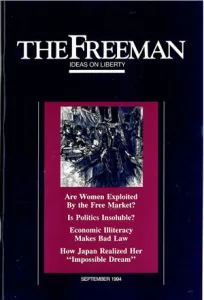
The Freeman: September 1994 Volume 44, 1994

This issue revisits the fundamentals of political science, constitutional limits, and the tension between rights and entitlements. Essays warn about economic illiteracy in the courts, highlight property rights as the cornerstone of progress, and analyze Japan’s postwar success. Additional topics include environmental science bias, Europe’s welfare-state crisis, markets for women workers, transit subsidies, and the social role of capitalists.

20121112 coveroct94small - Home

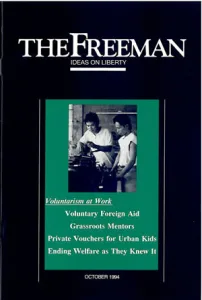
The Freeman: October 1994 Volume 44, 1994

This issue focuses on voluntarism as an alternative to bureaucracy, profiling grassroots mentors, private welfare reform, and philanthropists who strengthen civil society. Articles explore entrepreneurship, business ethics, immigration perceptions, regulatory failures in science, and the economic squeeze on even the smallest enterprises. Additional pieces revisit 19th-century reform movements, foundation philanthropy, the litigation explosion, and education standards.

20121112 covernov94small - Home

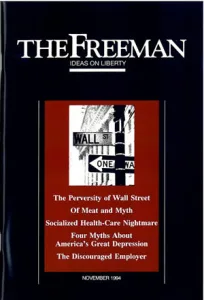
The Freeman: November 1994 Volume 44, 1994

This issue centers on U.S. health-care reform, the threat to the chronically ill, and firsthand accounts of socialist medicine. Authors expose the ethical and economic costs of mandated care, critique media advocacy, and debunk myths about the Great Depression. Additional essays address monetary cycles, job-destroying regulation, data manipulation, fiscal consequences, the meaning of money, and the social value of profit.

20121112 coverdec94small - Home

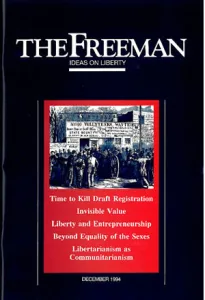
The Freeman: December 1994 Volume 44, 1994

This issue analyzes the hidden consequences of income redistribution, the overlap between environmentalism and market liberalism, and the consumer harm caused by “predatory pricing” laws. Articles examine regulatory cost spirals, government charity failures, entrepreneurship’s social role, and the limits of equality-based policy. Additional contributions explore communitarian-libertarian common ground, draft registration, federal control of education, and the principles legislators routinely ignore.

20121112 coverjan95small - Home

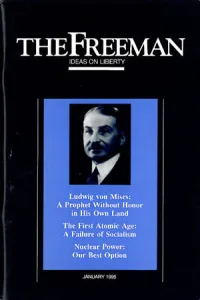
The Freeman: January 1995 Volume 45, 1995

This issue explores the economic and moral hazards of politicized policy—highlighting the failures of industrial planning, the unintended consequences of intervention, and the distortions created by regulatory subsidies. Authors assess America’s antitrust legacy, examine the roots of entrepreneurial success, and reflect on the dangers of treating government as a universal problem-solver. Additional articles address constitutional interpretation, the tension between democracy and liberty, and practical lessons in market coordination.

20121112 coverfeb95small - Home

The Freeman: February 1995 Volume 45, 1995

This issue examines how markets transmit information, why regulation harms consumers, and how private initiative outperforms centralized systems in everything from energy production to transit. Contributors critique environmental overreach, evaluate welfare-state logic, and explore the institutional foundations needed for a free society. Additional essays analyze property rights, legal reform, public-choice pitfalls, and the moral dimensions of economic liberty.

20121112 covermar95small - Home

The Freeman: March 1995 Volume 45, 1995

This issue critiques the intellectual roots of collectivism, showing how flawed economic assumptions lead to waste, dependency, and diminished responsibility. Articles explore tax-policy distortions, the failures of protectionism, and the superiority of voluntary action over political coercion. Additional work examines entrepreneurship, education reform, comparative political institutions, and the human consequences of government planning.

20121112 coverapr95small - Home

The Freeman: April 1995 Volume 45, 1995

This issue highlights the cultural and economic costs of expanding state authority, with essays on regulation, employment mandates, and the incentives that shape political behavior. Authors evaluate the minimum wage, the burden of taxation, and the structural flaws of welfare programs. Additional selections explore classical liberal thought, property-rights theory, and the practical effects of markets in daily life.

20121112 covermay95small - Home

The Freeman: May 1995 Volume 45, 1995

This issue analyzes the consequences of government intervention—from price controls to environmental diktats—showing how well-intended policies often suppress innovation and misallocate resources. Contributors examine civil liberties, foreign policy, public finance, and the erosion of constitutional limits. Additional essays address moral philosophy, education choice, entrepreneurship, and historical lessons in economic freedom.

20121112 coverjun95small - Home

The Freeman: June 1995 Volume 45, 1995

This issue explores the knowledge problem in education, the political meaning of vouchers, and the relentless discipline markets impose even on capitalists themselves. Articles revisit Romania’s transition from socialism, analyze why socialism fails, and discuss the rise of supply-side economics and the dangers of minimum-wage legislation. Additional commentary covers regulation, prices, entrepreneurship, and the moral foundations of economic liberty.