The Freeman: July/August 2009 Volume 59, 2009
Analyzes why government mismanages infrastructure and warns about excessive IP enforcement and unsustainable debt.

Analyzes why government mismanages infrastructure and warns about excessive IP enforcement and unsustainable debt.
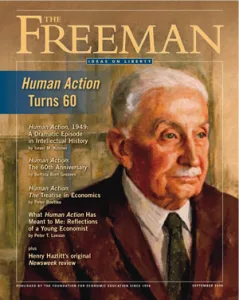
Marks the 60th anniversary of Mises’s Human Action and ties Austrian insights to modern crises.
Critiques FDR’s policies, tax haven crackdowns, and state planning in education and land use.
Urges repeal of trade barriers and analyzes deficit spending’s intergenerational impact and post-New Deal disintervention.
Questions deposit insurance’s role in stability and contrasts interventionist economics with Austrian macro theory.
Warns of reviving discredited Keynesian policies and uses globalization and Austrian theory to advocate market resilience.
Explains financial crisis bailouts through public choice theory and critiques too-big-to-fail and stimulus myths.
Explores raw milk regulation as a case of state overreach and critiques financial bailout logic and wage-price controls.
Debates patents’ impact on innovation, the growth of federal mortgage control, and celebrates Andrew Mellon’s entrepreneurial legacy.
Highlights Hong Kong’s market success, critiques U.S. inflation policy, and defends speculation and low-tax governance.
Examines energy independence myths, financial overregulation in the subprime crisis, and failures of Social Security and prohibition laws.
Explores agricultural subsidies’ role in food prices, informal economies in Africa, and failures of legal overregulation.