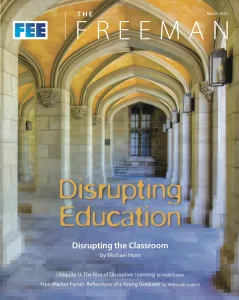
The Freeman: March 2013 Volume 63, 2013
Focusing on economic sustainability, this edition addresses the effects of deficit financing, the dangers of excessive borrowing, and the principles of prudent financial management.
Focusing on economic sustainability, this edition addresses the effects of deficit financing, the dangers of excessive borrowing, and the principles of prudent financial management.
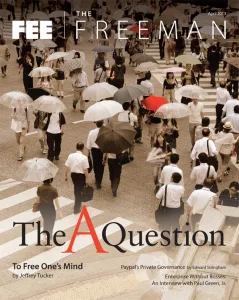
This edition delves into the nuances of anarchism in daily life, the dynamics of leaderless enterprises, and the role of private governance in digital transactions. It also critiques government programs that exchange food for votes and examines the economic implications of higher education’s expansion.
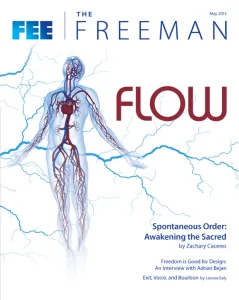
Engage with Adrian Bejan’s perspectives on the role of freedom in creative processes, delve into the dynamics of exit versus voice in economic systems, and examine the natural emergence of order within societal customs.
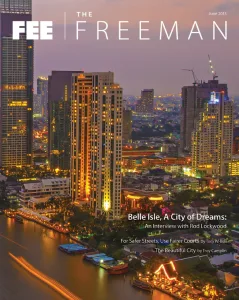
Learn about ambitious plans for urban revitalization in the Belle Isle interview, revisit Thomas Malthus’s theories in a modern context, and analyze how enduring cultural stories influence contemporary values.
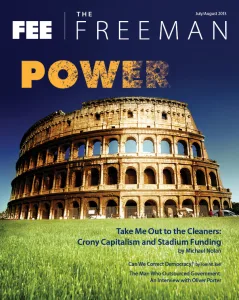
Analyze the effects of state regulations on economic development, highlighting case studies that illustrate the benefits of minimizing governmental control to encourage entrepreneurial endeavors.
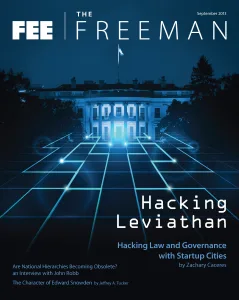
This issue examines the principles of voluntary exchange, emphasizing the ethical foundations of free trade and the societal benefits of uncoerced economic interactions.
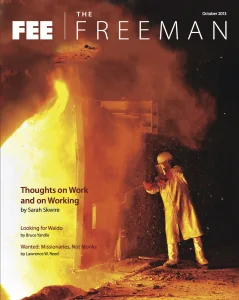
Explore examples of self-regulating markets, discussing how individual actions and interactions naturally result in complex and adaptive economic structures.
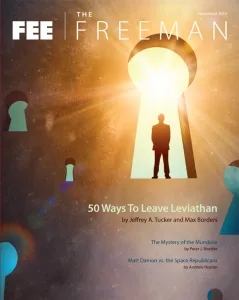
This issue explores the distortions caused by crony capitalism and how government favoritism undermines free markets. It also discusses the role of civil disobedience in pushing back against regulatory overreach and examines real-world examples of state intervention harming economic progress.
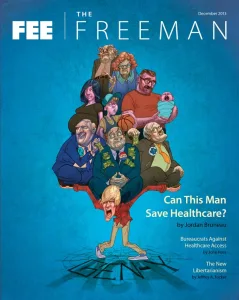
Healthcare regulation and bureaucratic barriers to medical access take center stage in this issue, analyzing how state control limits patient choice. Economic concerns, such as the impact of government debt and fiscal mismanagement, are also explored through case studies on spending and taxation.
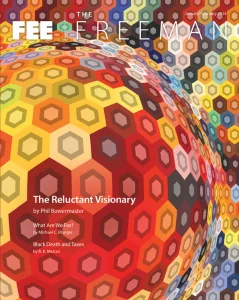
Explore the paradoxes of human behavior in economics, the potential of digital currencies like Bitcoin, and the debate over universal basic income. This edition delves into visionary ideas and the complexities of voting behavior.
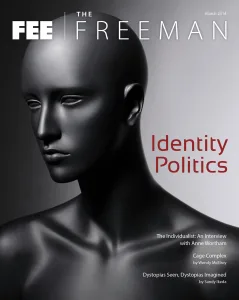
This issue of The Freeman explores the expanding prison-industrial complex, the failures of government-controlled healthcare, and the economic lessons from Hong Kong’s free-market success.
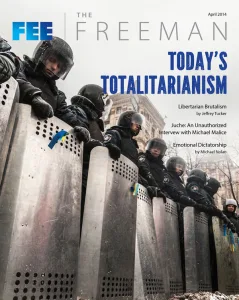
Individualism in academia, economic misconceptions, and the misattribution of Adam Smith’s ideas take center stage in this edition. Through interviews and analysis, it challenges prevailing narratives and emphasizes the importance of intellectual and economic freedom.