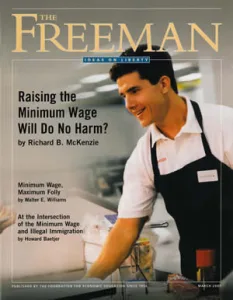
The Freeman: March 2007 Volume 57, 2007
Examines minimum wage misconceptions, cases of FDA abuse, and the legacy of Polish thinker Stanislaw Lem.
Examines minimum wage misconceptions, cases of FDA abuse, and the legacy of Polish thinker Stanislaw Lem.
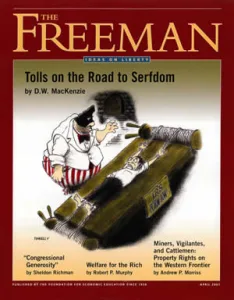
Discusses a framework for saving the environment, Congress’s power to tax, and the Great Depression,
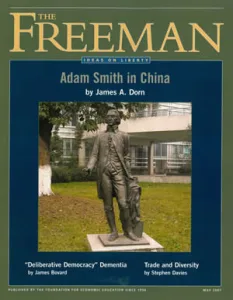
Examines the implications of a carbon tax, the role of the TSA, and the spirit of Adam Smith in China.
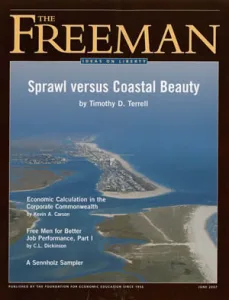
Reflects on distributed information, the Articles of Confederation, and the mistakes of nonlibertarians.
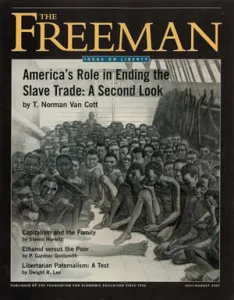
Discusses athlete salaries, the effect of individual freedom on job performance, and psychiatric treatment.
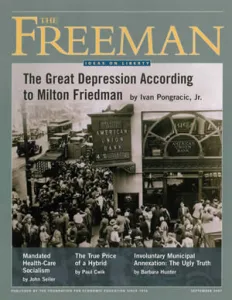
Examines health socialism, the market’s ability to produce human capital, and Friedman’s perspective on the Great Depression.
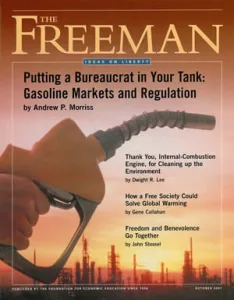
Explores the role of a free society in solving global warming, of bureaucrats in gasoline markets, and of benevolence in promoting freedom.
Critiques the Federal Reserve for fostering moral hazard, international rankings that put the U.S. below other developed countries, and the U.S. Department of Justice.
Examines the misleading nature of U.S. poverty figures, the relationship between modern psychiatry and government overreach, and the role of a passionate advocate for school choice.
Highlights the Federal Reserve’s distortionary interventions and the role of free markets in fostering peaceful relationships across borders.
Examines the downsides of “fair trade,” critiques how the American police has become increasingly aggressive, and more.
Explores the role of the president in managing the economy, civil-contempt imprisonment, and the discussion around universal healthcare.