The Freeman magazine was the flagship publication of the Foundation for Economic Education and one of the oldest, most respected journals of liberty in America. It was founded in 1950 through the efforts of John Chamberlain, Henry Hazlitt, Isaac Don Levine, and Suzanne La Follette. FEE acquired it in 1956, and within two years it had reached 42,000 subscribers.

Through its articles, commentaries, and book reviews, several generations of Americans have learned about the consequences and contradictions that flow from the illiberal policies of collectivism, interventionism, and the welfare state. For 66 years, The Freeman uncompromisingly defended the ideals of a free society.

FEE announced in September 2016 that the Fall 2016 issue would be the final edition of The Freeman magazine. Selected back issues are available at the FEE Store, and all issues are available here as downloads.

In June 2025, The Freeman was relaunched, but this time for the modern era on Substack. Subscribe for articles on markets, liberty, and culture from the perspective of anti-anti-anti-Communists.

Copyright Notice

Unless otherwise noted, and with the exception of John Stossel’s “Give Me a Break!” columns, all works published on FEE.org and FEE.org/freeman are published under a Creative Commons Attribution International License 4.0.

Feel free to share and copy as long as you credit FEE as the source.

Print Issues Archive

Filter by Year

20121111 coverjul01small - Home

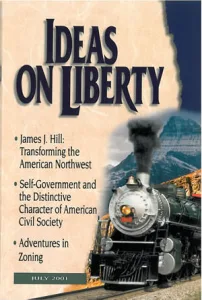
The Freeman: July 2001 Volume 51, 2001

This issue contrasts America’s original ideal of personal self-government with today’s dependence on political solutions, arguing that civil society flourishes when individuals govern themselves. Essays criticize “smart growth,” zoning, copyright and metric mandates, and other regulations that stifle enterprise, while celebrating economic freedom through the story of railroad entrepreneur James J. Hill and analyses of deposit insurance, wine-shipping restrictions, and continued “mini-Prohibition.” Additional articles address foreign intervention in the Balkans, lifestyle paternalism, pollution policy, Austrian-friendly universities, estate taxation, Marx’s legacy, and the unintended consequences of reform.
20121111 coveraug01small - Home

The Freeman: August 2001 Volume 51, 2001

This issue argues that economic progress emerges from entrepreneurship, specialization, and the spontaneous order of free markets rather than government direction. Contributors critique regulation, subsidies, and political favoritism that distort incentives and undermine growth. Additional essays highlight historical lessons, the ethics of voluntary exchange, and the dangers of central planning in education, labor policy, and welfare.

20121111 coversep01small - Home

The Freeman: September 2001 Volume 51, 2001

This issue explains why Social Security remains politically popular despite its poor long-term prospects, showing how demographic and fiscal realities will undermine today’s support. Contributors explore genetic-discrimination laws, China’s mixed capitalist–communist model, biodiversity regulation, the lessons of the Irish famine, and the dangers of conservative “phony marketeers” after communism’s fall. Additional essays defend free trade even for the poorest, promote school choice via universal tax credits, critique environmental command-and-control, analyze central banking and business cycles, and review books on government abuse, education, and New Deal statism.

20121111 coveroct01small - Home

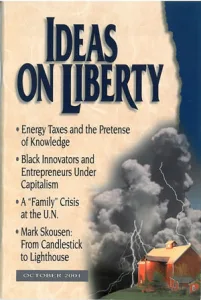
The Freeman: October 2001 Volume 51, 2001

This issue focuses on energy policy and environmental regulation, arguing that high gasoline prices, energy taxes, and command-and-control pollution rules stem from political pretensions of knowledge rather than market realities. Articles highlight black innovators and entrepreneurs, defend property rights and voluntary cooperation, question U.N. attempts to redefine the family, and profile Powel Crosley as a forgotten American entrepreneur. Additional pieces address SUVs and safety, Balkan policy, markets for pollution rights, conflict over government allocation, electricity price caps, and books on libertarian theory, welfare policy, constitutional violations, and global-warming alarmism.

20121111 covernov01small thumb - Home

The Freeman: November 2001 Volume 51, 2001

This issue examines the paradox of modern cities, where demands for personal freedom coexist with rising support for political control, regulation, and public dependency. Writers explore how crime, public-property incentives, environmental policy, trade, and industrial myths stem from misunderstandings about markets and government intervention. Additional articles challenge anticapitalist narratives, analyze energy and transportation policy, and defend economic liberty in the wake of September 11.

20121111 coverdec01small - Home

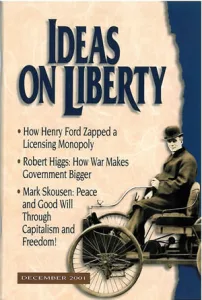
The Freeman: December 2001 Volume 51, 2001

This issue highlights how markets foster peace, innovation, and prosperity, illustrated through Henry Ford’s fight against licensing monopolies and broader critiques of regulatory expansion. Contributors challenge common economic fallacies, defend property rights, and show how government planning—from health care to energy—creates shortages, distortions, and perverse incentives. Additional essays explore trade, constitutional limits, education, and the moral case for capitalism.

20121111 cover200201small - Home

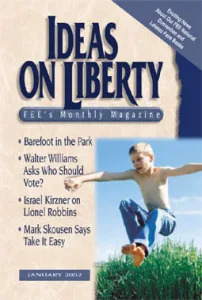
The Freeman: January 2002 Volume 52, 2002

This issue examines the power of personal responsibility, entrepreneurship, and voluntary cooperation in overcoming poverty, improving life, and limiting state abuse. Contributors challenge myths about wealth creation, analyze the failures of regulatory systems, and explore the moral foundations of liberty in everyday choices. Additional articles address media bias, public-sector inefficiency, education reform, and the dangers of central planning.

20121111 cover200202small - Home

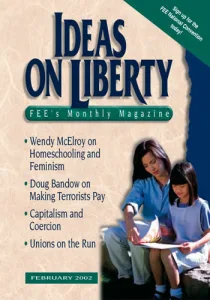
The Freeman: February 2002 Volume 52, 2002

This issue explores homeschooling, globalization, immigration, price controls, coerced “public service,” and the moral meaning of capitalist exchange. Writers dissect myths about coercion, postal monopolies, Amtrak subsidies, energy regulation, and gun-control scapegoating while highlighting the cooperative logic of markets. Additional essays address unions, liberalization, price-gouging accusations, and how free exchange improves lives across cultures and borders.

20121111 cover200203small - Home

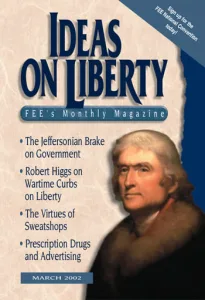
The Freeman: March 2002 Volume 52, 2002

This issue examines how government failure endangers the vulnerable, highlighting the collapse of Washington, D.C.’s child-welfare system and the destructive incentives built into bureaucratic management. Essays critique coercive “consumer protection,” defend decentralized political authority, and argue that competitive, voluntary institutions outperform centralized federal power. Additional articles explore market coordination, moral responsibility, regulatory excess, and the philosophical foundations of liberty.

20121111 april2002 - Home

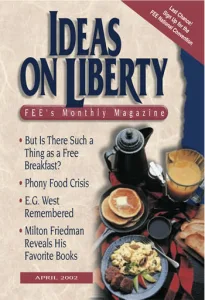
The Freeman: April 2002 Volume 52, 2002

This issue examines the origins of economic progress, exposing popular fallacies about trade, entrepreneurship, and environmental alarmism. Authors explore spontaneous order, competition, market incentives, and the dangers of relying on political authority to guide scientific or ecological outcomes. Additional articles highlight globalization, aviation security, taxation, and the historical lessons of failed regulatory regimes.

20121111 covermay02small - Home

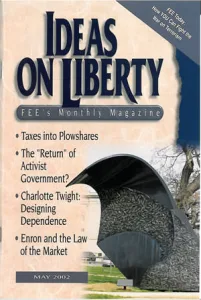
The Freeman: May 2002 Volume 52, 2002

This issue analyzes education reform, occupational licensing, welfare policy, and the dynamics of risk, showing how government intervention stifles innovation and opportunity. Contributors explore the economics of healthcare, the morality of capitalism, and the incentives behind charity and private safety initiatives. Additional essays address trade, taxation, public-choice failures, and the enduring superiority of voluntary action.

20121111 coverjun02small - Home

The Freeman: June 2002 Volume 52, 2002

This issue explores the moral and practical limits of government problem-solving, emphasizing how markets more effectively coordinate knowledge, allocate resources, and correct error. Writers examine health-insurance regulation, environmental policy, corporate governance, and the economics of information. Additional essays highlight globalization, entrepreneurial discipline, and how political incentives distort justice, medicine, and economic growth.